


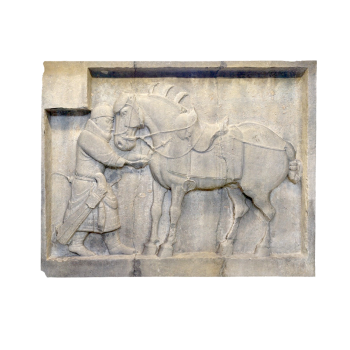
One of the stone reliefs of six horses in Zhaoling "Sa Lu Zi"
"Six Horses of Zhaoling" is a stone relief sculpture made by Emperor Taizong Li Shimin (reigned 626-649) to commemorate the six war horses he rode during the process of establishing the Tang Dynasty and unifying the whole country. This relief depicts the scene of Li Shimin's mount "Sa Lu Zi" (its name means "Qiu Lu" in Turkic language) after being injured by an arrow in battle, and the general Qiu Xinggong drew an arrow for it. In 1914, "Sa Lu Zi" and another war horse "Boxing Mao" were stolen and sold out of the country and are now in the Museum of Archaeology and Anthropology at the University of Pennsylvania.
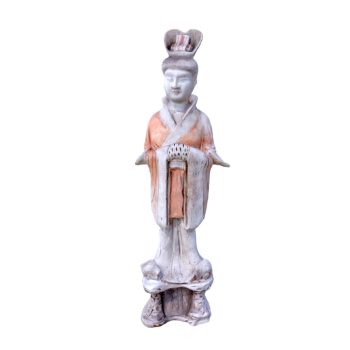
Painted pottery female figurines of the Tang Dynasty
This is a Chinese Tang Dynasty painted pottery female figurines (or ladies figurines). It was made in China during the Tang Dynasty (618-907) and was one of the funerary objects (Ming ware) in the burial culture of that time. The terracotta figures are dressed in wide-sleeved gowns with cross-necked collars, their hands close to their chests, their hair in a high bun (similar to the popular "high bun" or "fallen horse bun" at the time), and their faces are plump and round. This plump shape is the embodiment of the aesthetic ideal represented by Yang Guifei in the prosperous Tang Dynasty. They usually appear in groups and are placed in the ear chambers or corridors of noble tombs, symbolizing the maids, kabuki or attendants of the tomb owner.
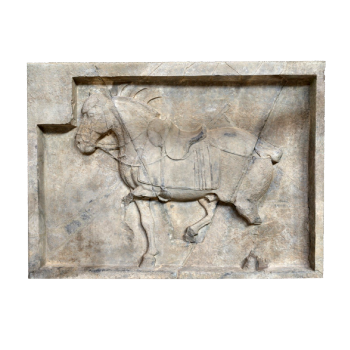
Liujun Stone Carving Relief in Zhaoling
This is one of the stone reliefs of "Six Horses of Zhaoling. The six horses in Zhaoling are stone reliefs carved by Emperor Taizong Li Shimin (reigned from 626 to 649) to commemorate the six war horses he rode during his war. The horse in the image is called "Punch Hair", which is named after its curly hair. In the battle with Liu Hei-yi, Li Shimin rode this horse. The "Zhaoling Liujun" was originally located on both sides of the northern altar of the Tang Taizong Zhaoling in Liquan County, Shaanxi Province. Among them, "Boxing Mao" and "Lu Sa Zi" were stolen and sold to the United States in 1914 and are now in the Museum of the University of Pennsylvania. The remaining four Jun are now in Xi'an Forest of Steles Museum
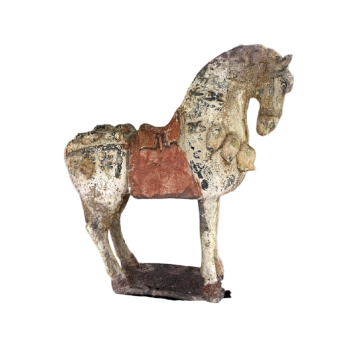
Ancient Chinese Painted Pottery Horse
This is an ancient Chinese painted pottery horse, probably belonging to the period from the Northern Dynasty to the Tang Dynasty. It is a pottery figurine made of clay. The surface was originally decorated with painted decorations (such as red and white pigments), but most of them have fallen off due to age, revealing the plain tires at the bottom and some residual paintings. This craft was very common in ancient Chinese burial art. This realistic and vigorous image of horses prevailed in ancient China from the Northern Dynasties (such as the Northern Wei Dynasty and the Northern Qi Dynasty) to the Tang Dynasty (618-907). The depiction of horses in this period reached an artistic peak, reflecting the strong national strength and the emphasis on horses of the times.
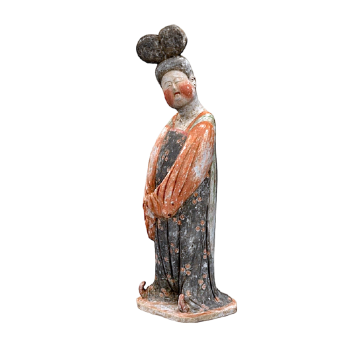
Painted Handmaid Figurines of Tang Dynasty in China
This item is a painted pottery female figurines from the Tang Dynasty (618-907 AD) in China, commonly known as the Tang Dynasty maid figurines. The style of sculpture clearly reflects the artistic characteristics of the Tang Dynasty. In the Tang Dynasty, the national power was strong and the aesthetic preference was for a rich female image, which was fully reflected in the round cheeks and posture of the pottery figurines. This kind of pottery figurines is a ghost, that is, funerary objects, unearthed in the tombs of the nobles of the Tang Dynasty. They are designed to simulate the life of the tomb owner in the afterlife, including servants, maids, musicians, dancers, horses and camels.

Pottery Figurines of Horse Riding in Tang Dynasty
Commonly known as the Tang Sancai, it is a treasure of ancient Chinese ceramic firing technology. With its rich colors and vivid modeling, it reflects the prosperity of the Tang Dynasty society and the importance of horses. The production process is complex. It provides people with valuable material materials to understand the historical value of Chinese Tang culture, and also makes batch after batch of Chinese and foreign collectors fall in love with its artistic charm. It is one of the most common themes in the culture and art of the Tang Dynasty. The discovery of the terracotta warriors of the Tang Dynasty has enriched our understanding of the culture and art of the Tang Dynasty, and also demonstrated the outstanding achievements of the Tang Dynasty in ceramic craftsmanship.

Kaiyuan reign
Kaiyuan Tongbao is a copper currency minted in the Tang Dynasty, and coins began to have "Tongbao" in the Tang Dynasty. In the early Tang Dynasty, the Sui Five Zhu system was used, which was light and confusing. In the fourth year of Wude reign of Emperor Gaozu of Tang Dynasty (621 AD), in order to rectify the chaotic currency system, Sui coins were abolished and the "Kaiyuan Tongbao" was minted, following the strict regulations of the Western Han Wuzhu, replacing the remaining Wuzhu in society.

Tang Dynasty female figurines
The custom of burying with terracotta figures has a long history and was popular in the Tang Dynasty for its lavish burial. The craftsmanship of making terracotta warriors has also become more mature, with lifelike depictions of terracotta warriors, gorgeous clothing, and the emergence of Tang Dynasty tri colored pottery craftsmanship, which resulted in a large number of pottery artifacts being buried in noble tombs at that time. Among them, the terracotta warriors of noble women were one of the essential accompanying burial terracotta warriors.
![[Cultural Relics of Tang Dynasty] Painted Female Figurines of Tang Pottery](https://file.freecreat.com/user/43/43/2023/1124/142654gSyb2mO7.png?x-oss-process=image/resize,m_pad,w_350/quality,q_80)
[Cultural Relics of Tang Dynasty] Painted Female Figurines of Tang Pottery
Tang pottery painted female figurines are painted female figurines of the Tang Dynasty. The female figurines are dressed in a bun, their faces are painted with red powder, their silkworm eyebrows are detailed, and their facial features are relatively concentrated in the center of their faces. They are slightly compact. They are dressed in long skirts, their hands are caged in front of their chests, and they are paunchy. They seem to be walking slowly. After the middle of the Tang Dynasty, especially during the Kaiyuan and Tianbao years, the fashion of taking obesity as beauty gradually formed in the society. Concubine Yang was favored by Li Longji and pushed this fashion to the extreme. This female figurine is a typical reflection of the aesthetic tendency in the prosperous Tang Dynasty.

Popular Models
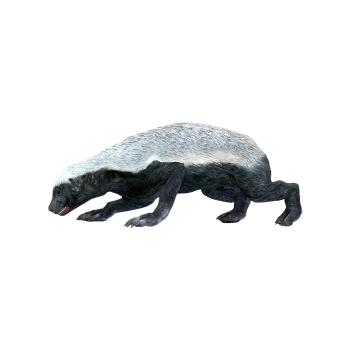
Honey Badger (3D animated model)
192 View
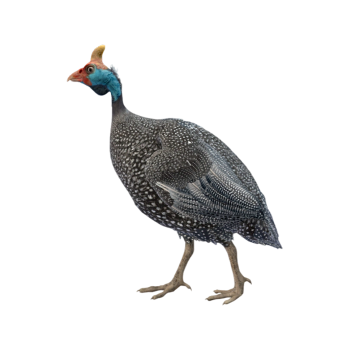
Guinea fowl (3D animated model)
163 View
Wild Goose (3D animated model)
185 View
Red Fox (3D animated model)
153 View
Random Model

Antique astronomical theodolite
838 View
Three lemons
795 View
induction cooker
657 View
Vintage clay pitcher
555 View

Abandoned rural houses
896 View



Gold-plated star ring
838 View